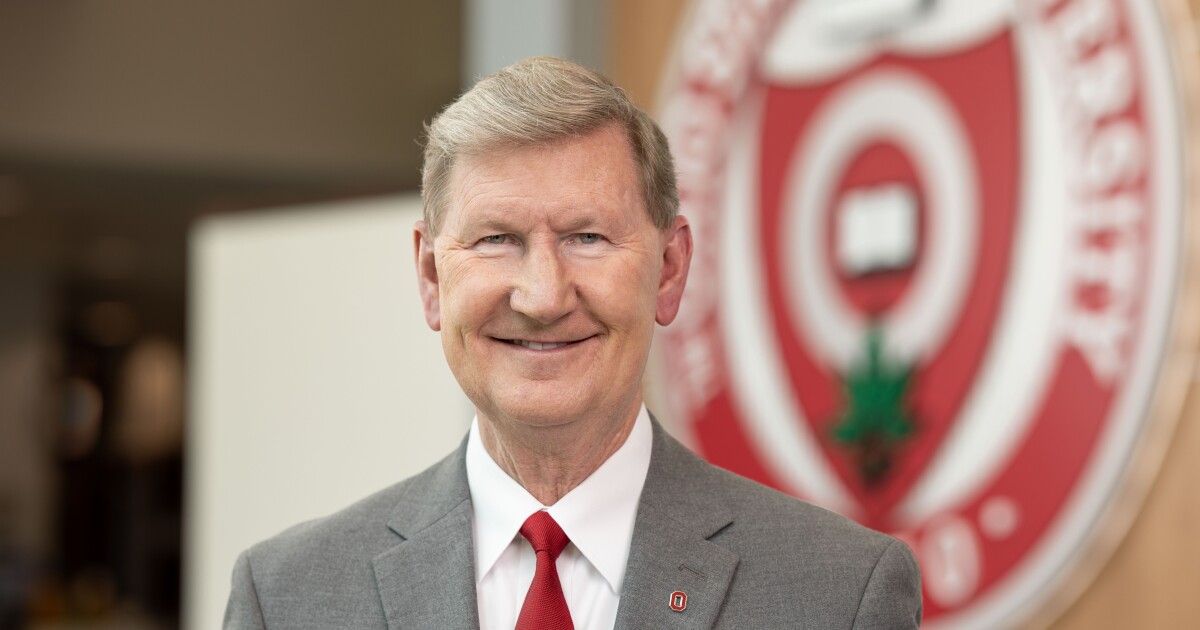
Ohio State President Ted Carter Resigns Amidst Inappropriate Access Controversy
COLUMBUS, Ohio – The academic world is grappling with significant news from The Ohio State University, as its 17th president, Walter “Ted” Carter Jr., has officially stepped down. After just over two years at the helm of one of the nation’s largest and most prestigious public universities, Carter’s tenure concluded abruptly following his disclosure to the Board of Trustees regarding what he termed a “mistake in allowing inappropriate access to Ohio State leadership.” This development, announced on Monday, March 9, 2026, has sent ripples through the university community and beyond, highlighting critical discussions around leadership ethics and institutional integrity.
The core of the matter centers on an “inappropriate relationship with someone seeking public resources to support her personal business.” This revelation prompted Carter to offer his resignation, which the Board of Trustees swiftly accepted. While details surrounding the specific nature of the relationship and the extent of the "inappropriate access" remain somewhat guarded, the university's swift action underscores the gravity with which such ethical lapses are perceived in higher education governance.
The Disclosure and Its Immediate Aftermath for University Leadership
President Carter’s resignation process unfolded rapidly, with his formal letter of resignation submitted on Saturday, March 7, and accepted by the board the following day. This rapid sequence of events reflects a decisive move by both Carter and the university's governing body to address the situation head-on. In a statement accompanying the university's announcement, Carter himself acknowledged the "personal reasons" behind his decision and directly addressed the ethical breach:
“I disclosed to the board of trustees that I made a mistake in allowing inappropriate access to Ohio State leadership.”
This statement, while brief, suggests a recognition of a lapse in judgment that compromised the impartiality and integrity expected of a university president. The "inappropriate access" appears to be the central point of concern, indicating that a personal relationship may have led to an individual gaining undue influence or consideration regarding university resources or decision-making. For any institution, especially one receiving significant public funding, maintaining a clear separation between personal connections and professional responsibilities is paramount to prevent conflicts of interest and uphold public trust. The board, while acknowledging Carter's contributions, expressed its dismay:
“The board was surprised and disappointed to learn of this matter and takes the situation and its potential impact on the university very seriously. We respect your decision and appreciate your cooperation in supporting an orderly leadership transition.”
This response from Board of Trustees Chair John Zeiger highlights the board's commitment to upholding institutional standards and ensuring a smooth transition during a challenging period. The incident serves as a stark reminder of the intense scrutiny and high ethical bar placed upon those in top leadership positions, particularly within public universities entrusted with significant financial and human capital. For more details on the board's perspective, read about the OSU President's Exit: Relationship with Public Resources Seeker.
President Carter's Acknowledgment and Legacy at Ohio State
Despite the circumstances of his departure, Carter’s statement also reflected on his contributions during his relatively short tenure. He expressed pride in the progress made, specifically referencing the ambitious "Education for Citizenship 2035" strategic plan. This plan aims to position Ohio State for future success by focusing on key educational and research initiatives, and its continuity will undoubtedly be a priority for the university moving forward. Prior to his role at Ohio State, Carter was a prominent figure in higher education, having served as president of the University of Nebraska System, where he was recognized as having a "big voice in the Big Ten" conference. His experience and strategic vision were seen as valuable assets to Ohio State.
In his parting words, Carter conveyed gratitude to the university community and wished them success:
“I believe we have made much progress during my time at Ohio State, and I’m sorry I’m not able to remain your president longer. The students, faculty and staff at this university are among the very best in the world, and the Education for Citizenship 2035 strategic plan has Ohio State poised to succeed for years to come.”
His statement, which also included thanks to the board and his wife, Lynda, acknowledged the personal toll of his decision while attempting to focus on the positive trajectory of the institution he led. The challenge for Ohio State now is to maintain that momentum and strategic focus while navigating a leadership vacuum created by this unexpected resignation.
Ethical Implications for University Leadership and Governance
The resignation of President Carter underscores the immense responsibility and ethical demands placed upon university presidents. Beyond academic and administrative leadership, they are custodians of institutional integrity and public trust. The phrase "president inappropriate access" instantly triggers concerns about conflicts of interest, potential favoritism, and the misuse of authority. For public institutions, where accountability to taxpayers and students is paramount, even the appearance of impropriety can have significant repercussions.
Key Ethical Considerations for University Leaders:
- Conflict of Interest: Leaders must vigilantly avoid situations where personal relationships or interests could influence professional decisions, especially concerning the allocation of public or university resources.
- Transparency and Disclosure: Prompt and full disclosure of potential conflicts or ethical lapses to governing bodies (like the Board of Trustees) is crucial for maintaining trust and allowing for appropriate action.
- Duty of Care: Presidents have a fiduciary duty to act in the best interest of the university, which includes protecting its reputation and financial integrity.
- Setting the Tone: The ethical conduct of top leadership sets the standard for the entire institution. Any perceived breach can erode morale and trust among faculty, staff, and students.
This incident serves as a powerful case study for ethics training within higher education administration. It highlights the fine line between personal life and public duty, particularly for individuals in high-profile roles. University boards often have specific policies regarding conflicts of interest and ethical conduct, and this event will likely prompt a review of such policies at institutions across the country. You can delve deeper into these aspects by reading Ohio State Leadership Ethics: President Carter's Disclosure & Resignation.
Navigating Future Leadership Transitions and Restoring Trust
Ohio State University now faces the critical task of an orderly leadership transition. The university has indicated that more details on this process will be shared in the coming days. Typically, an interim president will be appointed, followed by a comprehensive national search for a permanent successor. This process is often lengthy and requires careful consideration to ensure the chosen candidate not only possesses strong academic and administrative credentials but also embodies the highest ethical standards.
Practical Tips for Institutions During Leadership Transitions:
- Clear Communication: Maintain transparent and consistent communication with all stakeholders – students, faculty, staff, alumni, and the public – to manage expectations and address concerns.
- Reinforce Values: Reiterate the university’s commitment to integrity, ethics, and its mission, reassuring the community that these values remain central.
- Support for Interim Leadership: Provide robust support for the interim president to ensure continuity in operations and strategic initiatives.
- Thorough Search Process: Conduct a meticulous and transparent search for the next president, emphasizing not only qualifications but also demonstrated ethical leadership and sound judgment.
- Review and Strengthen Policies: Use the incident as an opportunity to review and strengthen policies related to ethics, conflicts of interest, and leadership conduct.
For Ohio State, moving forward means not just finding a new leader but actively working to rebuild any trust that may have been diminished. It involves demonstrating an unwavering commitment to the principles of good governance and ensuring that all interactions, particularly those involving public resources, are conducted with unquestionable integrity. The university’s ability to navigate this period effectively will be crucial for its continued standing and the confidence of its vast community.
The resignation of President Ted Carter marks a challenging chapter for The Ohio State University. While his contributions to the institution over the past two years are acknowledged, the circumstances of his departure serve as a poignant reminder of the profound ethical responsibilities incumbent upon leaders in positions of immense power and public trust. As Ohio State begins its search for a new president, the emphasis will undoubtedly be on finding a leader who can not only guide the university to new academic heights but also exemplify unimpeachable integrity, ensuring that appropriate boundaries are always maintained in the pursuit of the institution’s mission.