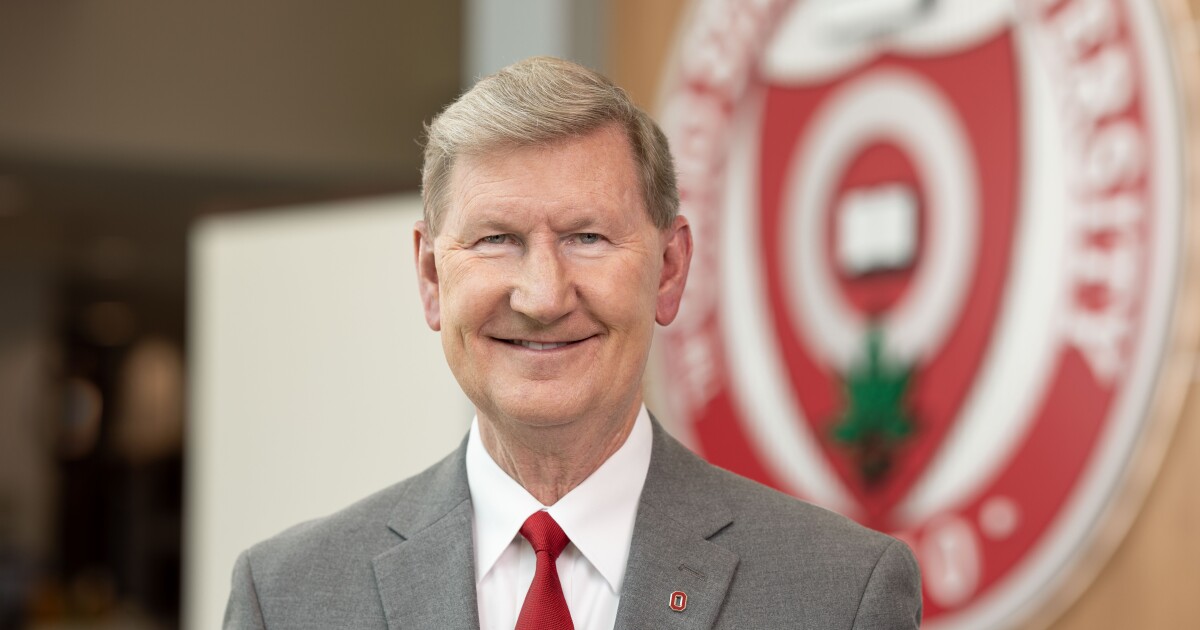
The Unexpected Resignation of OSU President Walter "Ted" Carter Jr. Amidst "Inappropriate Access" Disclosure
The world of academia and institutional leadership was recently met with significant news as Ohio State University's 17th president, Walter "Ted" Carter Jr., unexpectedly resigned from his prominent role. Serving just over two years at the helm of one of the nation's largest and most respected public universities, Carter's departure on Monday, March 9, 2026, stemmed from a disclosure he made to the Board of Trustees: an "inappropriate relationship with someone seeking public resources to support her personal business." This revelation sparked immediate discussions about leadership ethics, institutional integrity, and the critical importance of maintaining clear boundaries in positions of power, directly addressing concerns around
Ohio State President Ted Carter Resigns: Inappropriate Access Fallout.
President Carter, who previously held the presidency of the University of Nebraska System, took office in 2023, bringing with him a reputation for strong leadership and a "big voice in the Big Ten" conference. His tenure at Ohio State was marked by strategic initiatives like the "Education for Citizenship 2035" plan, which he highlighted in his resignation statement as a pathway for the university's future success. However, the shadow cast by the recent disclosure led to a swift and decisive action, demonstrating the university's commitment to upholding its values.
Unpacking the "Inappropriate Access" and Its Ethical Implications
At the core of President Carter's resignation was his acknowledgement of "making a mistake in allowing inappropriate access to Ohio State leadership." While the university's statement specified an "inappropriate relationship" with an individual seeking public resources for personal business, Carter's own words emphasized the access component, suggesting a breach of the professional protocols and ethical standards expected of a university president.
This situation immediately raises red flags concerning potential conflicts of interest and the misuse of institutional authority. When a university president, who holds immense power and influence over public resources, becomes involved in a relationship—even if not explicitly sexual—with someone actively seeking those very resources for personal gain, the integrity of decision-making can be compromised. Such a dynamic creates a perception, if not a reality, of preferential treatment or undue influence, undermining the fairness and transparency essential for any public institution.
The term "inappropriate access" can encompass a range of behaviors, from simply opening doors that wouldn't normally be open, to sharing sensitive information, or even subtly (or overtly) influencing outcomes in favor of the associated party. Regardless of the specific nature of the access, the crucial point is the potential for an unfair advantage granted due to a personal connection, rather than merit or proper process. This scenario highlights why university leaders, particularly presidents, are held to the highest ethical standards. Their actions must be above reproach to ensure public trust and the equitable allocation of resources. The board's reaction—being "surprised and disappointed"—underscores the gravity with which such matters are viewed within institutional governance.
Broader Implications for University Governance and Public Trust
The resignation of a university president under such circumstances reverberates far beyond the individual involved. It triggers a significant examination of governance structures, ethical oversight, and the perception of accountability within higher education. For an institution as prominent as Ohio State University, a sudden leadership change, especially one linked to ethical questions, can impact:
* **Institutional Reputation:** Events like these can temporarily tarnish the hard-earned reputation of a university, raising questions about internal controls and ethical culture.
* **Stakeholder Confidence:** Students, faculty, staff, alumni, and donors rely on strong, ethical leadership. A breach of trust at the top can lead to skepticism and a decrease in confidence in the institution's ability to manage itself responsibly.
* **Morale:** The unexpected departure of a president, particularly under these conditions, can disrupt campus morale and create uncertainty among the university community.
* **Strategic Continuity:** While President Carter highlighted the "Education for Citizenship 2035" plan, a sudden transition means a new leader will need to either embrace and continue these initiatives or re-evaluate them, potentially causing delays or shifts in strategic direction.
The Board of Trustees plays a critical role in navigating such crises. Their swift acceptance of Carter's resignation, coupled with their statement acknowledging the seriousness of the situation, signals a commitment to maintaining institutional integrity. This decision, though difficult, often serves to reassure the public that ethical lapses will not be tolerated at the highest levels of leadership.
Navigating Ethical Boundaries: Lessons for Leaders and Institutions
President Carter's resignation serves as a potent reminder of the complex ethical landscape that leaders of major institutions must navigate daily. For any individual in a position of significant influence, especially those overseeing public resources, maintaining stringent ethical boundaries is paramount. Here are key takeaways and actionable insights:
* **Clarity on Conflicts of Interest:** Institutions must have clear, comprehensive policies regarding conflicts of interest and relationships that could compromise professional judgment. These policies should be regularly reviewed, communicated, and enforced.
* **Transparency and Disclosure:** Leaders should be encouraged, and in some cases mandated, to disclose potential conflicts or relationships that could appear to be inappropriate. Carter's self-disclosure, while leading to his resignation, exemplified a commitment to transparency that allowed the board to act.
* **Robust Oversight:** The Board of Trustees or equivalent governing body must maintain robust oversight mechanisms, including clear reporting lines for ethical concerns and an independent process for investigation.
* **Leading by Example:** Ethical leadership starts at the top. When a president or CEO demonstrates unwavering commitment to integrity, it sets a powerful tone for the entire organization. Conversely, any perceived lapse can erode this foundation.
* **Professional Distance:** Leaders, particularly those managing substantial public assets, must maintain an appropriate professional distance from individuals or entities seeking to benefit from their position. This often means being hyper-aware of social interactions and personal relationships that could be misconstrued or exploited.
* **Ethical Training and Culture:** Regular ethical training for all levels of leadership, coupled with fostering a culture where ethical concerns can be raised without fear of reprisal, can act as preventative measures.
This incident underscores the continuous challenge of upholding integrity in leadership. As detailed in
Ohio State Leadership Ethics: President Carter's Disclosure & Resignation, the board's swift action in accepting President Carter's resignation reinforces that ethical conduct is non-negotiable, even for those at the very pinnacle of an organization.
Conclusion: The Path Forward for Ohio State
The resignation of Walter "Ted" Carter Jr. marks a significant moment for Ohio State University. While his tenure was brief, his departure due to a disclosure of an "inappropriate relationship" and the allowing of "inappropriate access" serves as a powerful case study in the critical importance of ethical leadership and the unwavering standards expected of those entrusted with managing public institutions. The university now faces the task of an orderly leadership transition, seeking its 18th president to guide its future while reaffirming its commitment to integrity and public trust. This event, though challenging, ultimately reinforces the principle that accountability and ethical conduct are foundational pillars for any institution aiming to succeed and maintain its esteemed position in society. The lessons learned from this episode will undoubtedly influence future leadership appointments and strengthen the ethical frameworks governing higher education nationwide.